Bed and Rome and Breakfast - 3 B&B in Rome: Tour
Visualizzazione post con etichetta Tour. Mostra tutti i post

mercoledì 13 marzo 2019

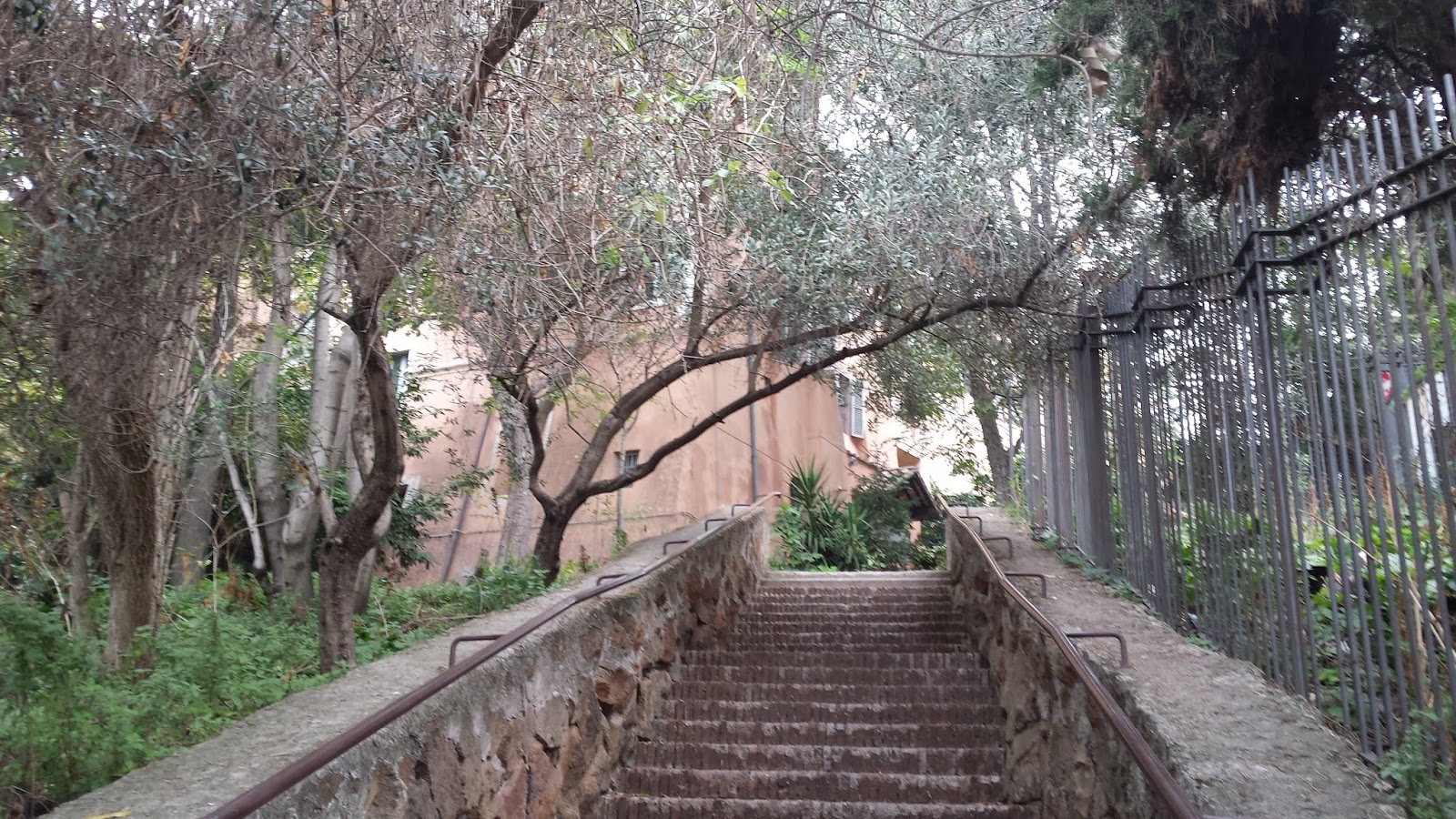
11 PHOTOS OF ROME - GREEN IN THE CITY


How many people know that Rome is the city that has the most green areas in all of Europe? 67% of the municipal area consists of green areas. Urban parks, historic villas, public gardens, green areas of furniture characterize the urban area. Nature reserves, protected areas and agricultural areas occupy a large part of the peripheral part of the municipality.
It's curious to note that Rome is the greatest agricultural municipality in Europe, having 50 thousands hectares for agriculture. And in Rome there are 320 thousands trees.

Green Rome


However we ant now also to give a look to the private gardens, at the entrance of residential building


Private green 


Walk around Rome and discover those hidden green corners


lunedì 12 novembre 2018

9 PICTURES OF ROME - MUSEUM OF THE AURELIAN WALLS

Aurelian Walls


Just walk few minutes from the St. John Villa and you will find, at Porta San Sebastiano at the beginning of the Appian Way, a small and free museum, the Museum of the Aurelian Walls.


Just walk over the wall, the largest and best preserved monument from ancient Rome, and look at the green landscape south of Rome.


Do you want to discover the hidden Rome? Just reserve your room at the St. John Villa Bed & Breakfast


Vincenzo

martedì 25 settembre 2018

EAST OF THE CENTER - ROMAN WALKS 5

Lateran Obelisk

Roman walk - Ancient but still alive


The walk of today covers the East side of the historical center leaving from San Lorenzo Guest House. 

The itinerary includes 4 of the Seven Pilgrim Churches, all of them being originally erected in the IV century AD.
Here are the stops of the tour.

  1. Porta Maggiore, the entry point of most of the aqueducts delivering water to anci
    Santa Maria Maggiore - View of the backside
    ent Rome
  2. Basilica of Santa Croce in Gerusalemme, erected in the IV century AD, where the relics of the Holy Cross are preserved. It was built around a room of Palazzo Sessoriano, the palace that was the house of St. helena, the mother of Emperor Constantine I
  3. Archbasilica of St. John Lateran, mother of all the chirches of the world, Holy See and cathedral of Rome
  4. Scala Sancta - Holy Stairs, the stairs originally located in the palace of the Roman governor in Jerusalem and which were ascended by Jesus Christ to go to trial before Pontius Pilate
  5. Lateran Obelisk, the tallest and most ancient Egyptian obelisks in Rome
  6. Basilica of Santa Maria Maggiore, the only of the four Major Papal Basilicas still maintaining its original palochristian structure. It is located on the site where, according to a legend, snow fell during the summer, on August 5, 352 AD. Every year the miracle is remembered with a cascade of white petals from the ceiling during the morning and evening mass
  7. Baths of Diocletian, the biggest imperial baths of the ancient Rome, inaugurated in the year 305 AD. They are now one of the locations of the National roman Museum
  8. Castra Praetoria, the barracks of the Praetorian Guard. The area is still used for the same purpose, so being the most ancient barracks in the world
  9. Houses in the Walls
  10. Castra Praetoria today
  11. Basilica of San Lorenzo fuori le Mura, Papal Basilica, also originally erected during the IV century AD.

Discover Rome with us

Vincenzo


lunedì 16 luglio 2018

ROMAN WALKS - 4 - VIA NOMENTANA

Monument to the Bersagliere

We wrote here that Rome is not only the historical center..
Walking along the streets leaving from the gates of the Aurelian Wall gives to the visitor a different view of the city, of its modern development, of its real life.
Nevertheless, along the walk, one will find also sites that are testimonies of the past.
Via Nomentana is not one of the main roads leaving the center of Rome, it has not the status of national road, but it is one of the busiest and one that has had an important part in the history of the ancient and modern city.
And I have a special relation with this street because I was born along it and my school was there too.

Porta Pia: Art and History

Porta Pia
Via Nomentana starts from Porta Pia, one of the gates of the Aurelian Wall. Porta Pia has been designed by Michelangelo Buonarroti and that's alread a good reason to give a look to it.
Its importance is, however, essentially historic. It was here, opening a break in the Aurelian Wall, that the Italian army entered to Rome on September 20, 1870 ending the temporal power of the Pope.  Well, there would be a lot to say about that, but it is too long for this post.
The break was opened just steps away from Porta Pia and its position is indicated by a column. Inside Porta Pia there is the Historical Museum of the Bersaglieri, the infantry corp that first entered to Rome. A monument to the Bersagliere soldier is located just in front of Porta Pia. Entering inside the center, the street continues straight with Via XX Settembre, celebrating the entry to Rome of the italian army and then with Via del Quirinale leading directly to the square in front of the presidential palace, Quirinale Palace, formerly residence of the kings of Italy and earlier of the Pope.

Parks

Villa Tornonia
Along the first 2.5 km, Via Nomentana is flanked by typically bourgeois buildings and some villas of the Roman aristocracy.. The most important and known of them is Villa Torlonia. Initally the land belonged to the Pamphilj family, later it was bought by the Colonna family, both of them using it for farming. It was finally it was bought by the Torlonia princes that started the construction works calling the famous architect  Valadier. 
Casina delle Civette at Villa Torlonia
During the fascist period it was used as residence by Benito Mussolini that rented it at the symbolic price of 1 Italian Lira per year. A bunker was also built for protection during bombing.
After the war it was abandoned till 1978 when it was acquired by the municipality of Rome and transformed to museum and public garden.

The other villas along Via Nomentana are Villa Paganini, Villa Blanc and Villa Leopardi.  However there are also several other private green spaces belonging to private residences, and insitutional building, including several embassies and consular offices

Embassies

Via Nomentana is characterized by several embassies and consular offices located along it or in the streets just on its sides. Russia, Lybia, Afghanistan, Malaysia, are some of the countries havin their embassy or consular office located here

Sant'Agnese and Santa Costanza

Basilica of Sant'Agnese
The complex of SantìAgnese and Santa Costanza is worth a visit for artistic, religious and historical reasons. It includes the Basilica of Sant'Agnese, erected in the VII century BC, the ruins of the old basilica dated IV century AD and the Mausoleum of Santa Costanza, also dated IV century AD. 
Mausoleum of Santa Costanza
and ruins of ancient Sant'Agnese
According to the tradition the mausoleum was erected by Costantina, also know as Costanza, daughter of the Emperor Constantine as her own birial place. According to another hypothesis, it was erected by the Emperor Julian I as burial place for his wife Helena that was sister of Costanza. In any case Costanza was buried there. Her Sarcophagues was later moved to the Vatican Museums.

Ancient Rome

Mausoleum of Tor di Quinto
In front of Villa Blanc ine can see another mausoleum, more correctly a piece of a mausoleum. It is know as Mausoleum of Tor di Quinti, because it was originally located in the area of Tor di Quinto, alonjg the Via Flaminia. It was moved to Via Nomentana on the XIX century to mark the entrance of Villa Blanc.
Ponte Nomentano
Approximately 1.5 km after the mausoleum one will reach Ponte Nomentano. Along with the Milvian Bridge, it was one of the most important entraces to the urban area of Rome. Originally built during the republican period, it was reconstructed in the VI century AD and later fortified and partially reconstructed during the XIX century.
It has remained open to the car traffic until aproximately20 years ago. Today, along to the surrounding park, it is restricted to pedestrians. 

Garden City and Night Life

Città Giardino
Soon after Ponte Nomentano there is a square with a market that is dedicated to Menenius Agrippa, the Roman politician that persuaded the plebs to end the secession at the beginning of the V century BC. He gave his speech to the plebs in this area (Mons Sacer). After the secession ended, the office of Tribune of the Plebs was created. On the side of  Piazza Menenio Agrippa, there is another square, Piazza Sempione. In the early XX century this area was still out of the city. Here it was erected a bourgeois district called Città Giardino (Garden City), made of small villas with a private garden. The square, with its church, was the heart of the district. Nowadays it has became a spot with a vivid nightlife, so accounating the area of Ponte Nomentano with the one of the Milvian Bridge.

Piazza Sempione

the Roman politician that persuaded the plebs to end the secession at the beginning of the V century BC. He gave his speech to the plebs in this area (
From Piazza Sempione it is to go back to Porta Pia with one of the several bus lines passing here

Vincenzo
Reserve your room at Villa Borghese Guest House and also at San Lorenzo Guest House and St. John Villa

giovedì 1 marzo 2018

ROMAN WALKS - 3 - SOUTH OF THE CENTER

Circus Maximus and Palatine

The itinerary we are recommending today starts from the St. John Villa and is dedicated to the southern part of the historical center of Rome, so including the Aventine hill, Rione Testaccio and the Rione San Saba.

mercoledì 13 dicembre 2017

GRAFFITI TOUR


Graffiti

A tour of independent art galleries in Rome - Street art from Pigneto to Torpignattara.


People know that in Rome beauty can be found everywhere, even without looking for it.
The center of the city is an example of that. It is the Rome of the emperors, of the popes, of Dolce Vita that is in the imagination  of everyone.
Rather, my interest is in an other side of Rome, more hidden but not less interesting, even if you don’t find Rome’s street art in a guide book.

lunedì 9 ottobre 2017

OUTLET SHOPPING IN ROME


Italian fashion brands are at the top level of appreciation all around the world. When in Italy, going for shopping is a must do for many travelers.
Outlets provide an excellent combination among variaty of choice of top brands and convenint prices.
Close to Rome there are two well know outlets, one in Valmontone and one in Castel Romano.

domenica 6 agosto 2017

PICK OF THE DAY - ROME RESTAURANTS MAP


In a city like Rome there are thousands of restaurants of every type for all pockets.
And there are a lot of websites where one can find the ranking of their top restaurants.
Obviously the rankings are not always the same but some restaurants can be found in several of them.
But, in most of the cases, their location is not whown on a map. Once entered in those websites, the visitor will have to start huntng to find the closest place.
Well, I took one of those rankings, click here to see the full details, and placed all of them on a map of Rome. It contains 38 restaurants of all types and for all pockets. Just open the map and give a look.


And, don't forget to book your room at our properties.

Villa Borghese Guest House
St. John Villa

domenica 9 luglio 2017

ROMAN WALKS - 2 - ARCHEOLOGY AND CHRISTIANITY


The walking tour we are presenting in this post starts from the St. John Villa. It touches some of the most famous sites of Rome, Colosseum, Santa Maria Maggiore, St. John Lateran.

lunedì 3 luglio 2017

ROMAN WALKS - 1 - NORTH OF THE CENTER


As well as every city, and even more, Rome is a city that must be discovered walking. There are so many places to be seen, such a long history and so much art that, jumping from one of the main spots to the other does not allow to understand it fully.
We have already prepared and presented some walking tour and we have presented those in the series One week in Rome.

giovedì 18 maggio 2017

ONE WEEK IN ROME - PART 14


FROM THE FICTIONAL DIARY OF A BRITISH TRAVELER


Back to part 13

From St. Peter to Porta Portese


I will tell you the full truth and that is that I did not enter in the St. Peter's Basilica or in the Vatican Museums.
Even if that was my original idea when, in the morning, I left San Lorenzo Guest House, once I got there I changed my schedule. Weather was so nice, indeed bad weather is not a very usual event in Rome, that I thought that staying inside was not the best idea.
The lesson I got in the previous days was that, when in Rome, first of all, before visiting museum and sites, one must feel the ideal that is behind this unique city. The best way to get it is to walk around.

giovedì 4 maggio 2017

ANCIENT ROME LIVE

 Emperor Augustus

The spring and summer appointment with the ancient Rome of Ceasar and Augustus is back. Go back at the birth of the Roman Empire.

martedì 25 aprile 2017

ONE WEEK IN ROME -PART 13

FROM THE FICTIONAL DIARY OF A BRITISH TRAVELER


Back to part 12

Going down for the Capitol Hill and proceeding along Via del Teatro Marcello, on the right one can see the Theater of Marcellus, one of the living monuments of Rome. It is dedicated to the nephew of Augustus and it was the biggest theater in ancient Rome. After falling out of use it has been transformed, along the centuries, in a residential building.

domenica 9 aprile 2017

TIP OF THE DAY - SOME SPECIAL SHOPS IN ROME


Olives and olive oil

Going for shopping is an important part of the traveling experience. It brings into contact with the local habits and provides the opportunity to take back something to remember the trip.
Anyhow, in this post we wish to focus onto few shops in Rome that are somehow special, unusual and that are located very close to our guest houses and b&b.

venerdì 31 marzo 2017

ONE WEEK IN ROME - PART 11

FROM THE FICTIONAL DIARY OF A BRITISH TRAVELER

Go back to part 10 if you missed it.

During my stay in Rome, I heard that many Romans complain about the poor efficiency of public transportation?
Is that a problem for a traveler? Indeed yes, if one is visiting Rome with a tourist mentality, so focusing on the main spots. Once one enters into the point of view of a real traveler, it becomes an opportunity because, when walking, there is the possibility to see a lot of things that otherwise would remain unknown.
With the help of the staff of San Lorenzo Guest House I planned my next march (after the training I had during the week I beleive to be ready for the Olympics)


Basilica of Santa Maria Maggiore
Santa Maria Maggiore

The final destination was the Caius Cestius pyramid and I got there through a long tour.
Walking along the Aurelian Walls, where you can see houses in the walls (it's Villa Gentili-Dominici, the biggest villa inside the center of Rome) and then along the Termini station I reached Piazza dei Cinquecento, in front of the station. Then I walked to reach the Basilica of Santa Maria Maggiore, one of the four main basilicas in Rome along with St. Peter, St. John Lateran and St. Paul.
Moses by Michelangelo Buonarroti
Moses by Michelangelo
According to the tradition, it has been built on the place where it snowed in August during the IV century AD. From Santa Maria Maggiore I walked to Colle Oppio, keeping aside od the Beths of Trajan, to reach the Basilica of San Pietro in vincoli to admire the Moses by Michelangelo Buonarroti. It's woth to enter to the faculty of Engineering, junt aside of  the church, to see the kloster and the well in the middle of it.
Going down though the Scalinata dei Borgia (Borgia's Stairs), I reached Via Cavour and the Via dei Fori Imperiali. What could I say about this street that connects the Colosseum with Piazza Venezia? Simply you walk across the history because the Forums were the center of the political life in ancient Rome.
Via dei Fori Imperiali
Piazza Venezia is the crucial point of the traffic in the center of Rome . I was told that, at the beginning of Via del Corso, there is a retractable footboard, but it is currently not working, from where a traffic policeman attempts to keep evereything in order. He must be a real artist.


But now is time for a break.